
TRL: an essential framework to measure and fund innovation
The origin and evolution of the Technology Readiness Level, from NASA to worldwide adoption. How to use it to align teams and funders.
The origin and evolution of TRL: from NASA to international adoption
The concept of the Technology Readiness Level (TRL) was developed by NASA in 1974, then formalised in 1989 with a 7-level scale, before reaching its current form of 9 levels in 1995. This methodology was born of a critical need: to assess with precision the reliability of technologies before deploying them in space.
(Imagine for a moment sending humans into space with unproven technologies... not exactly reassuring, is it?)
According to NASA's official definition, TRLs are "a systematic measurement system that supports assessments of the maturity of a particular technology and the consistent comparison of maturity between different types of technologies" [1].
Today, the TRL scale has become an international standard, adopted well beyond the space sector:
- By the European Union, which has made it a standard since its H2020 programme [2]
- By large industrial companies such as Airbus, which uses it in particular to assess the maturity of its hydrogen aircraft technologies [3]
- In the medical field for health innovations, as illustrated by the specific adaptation produced by BIRAC (Biotechnology Industry Research Assistance Council) in India for biotechnologies [4]
- By startups seeking funding, for whom TRLs are an essential framework to communicate their development and attract investors [5]
- In ecological transition projects
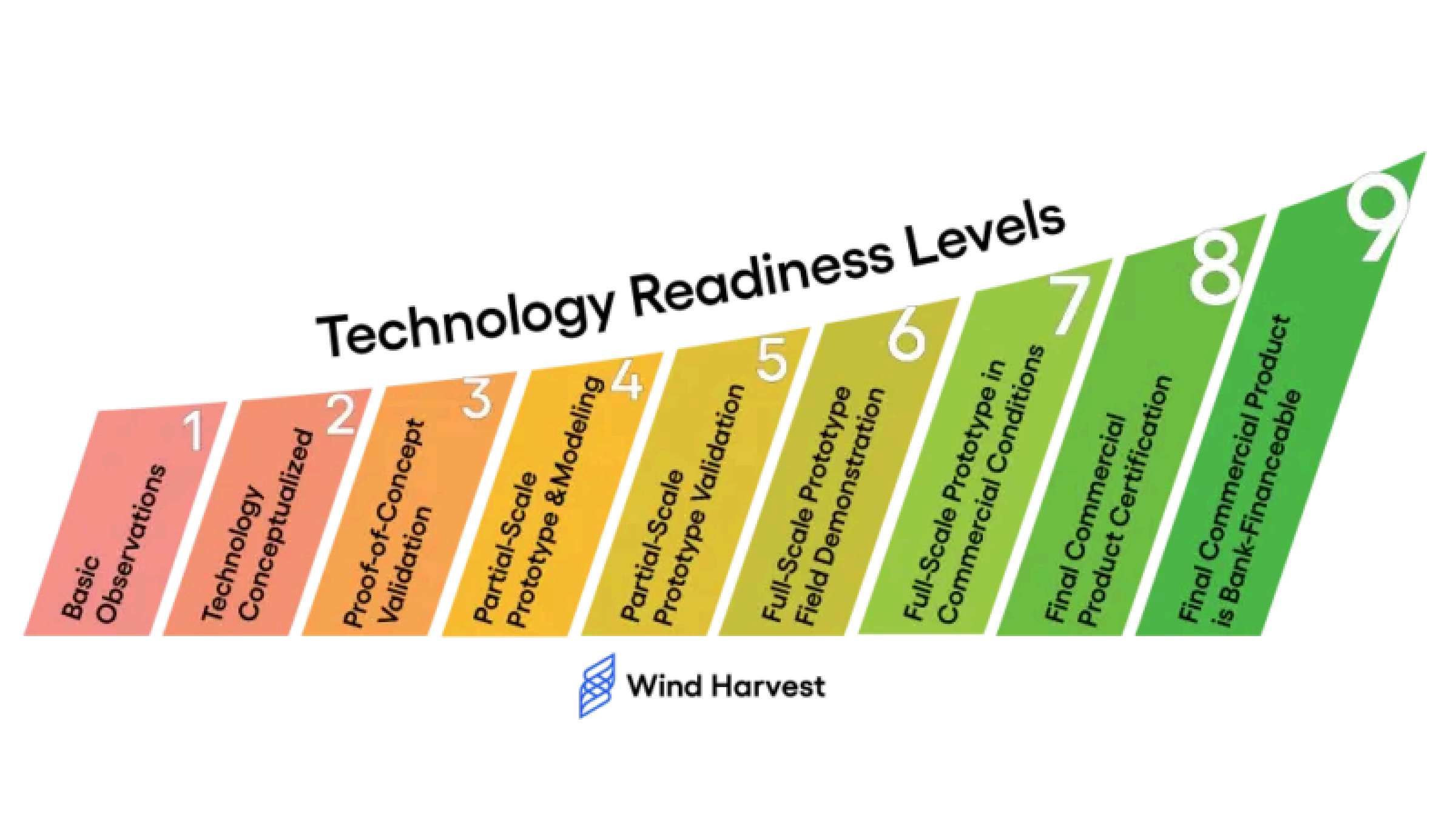
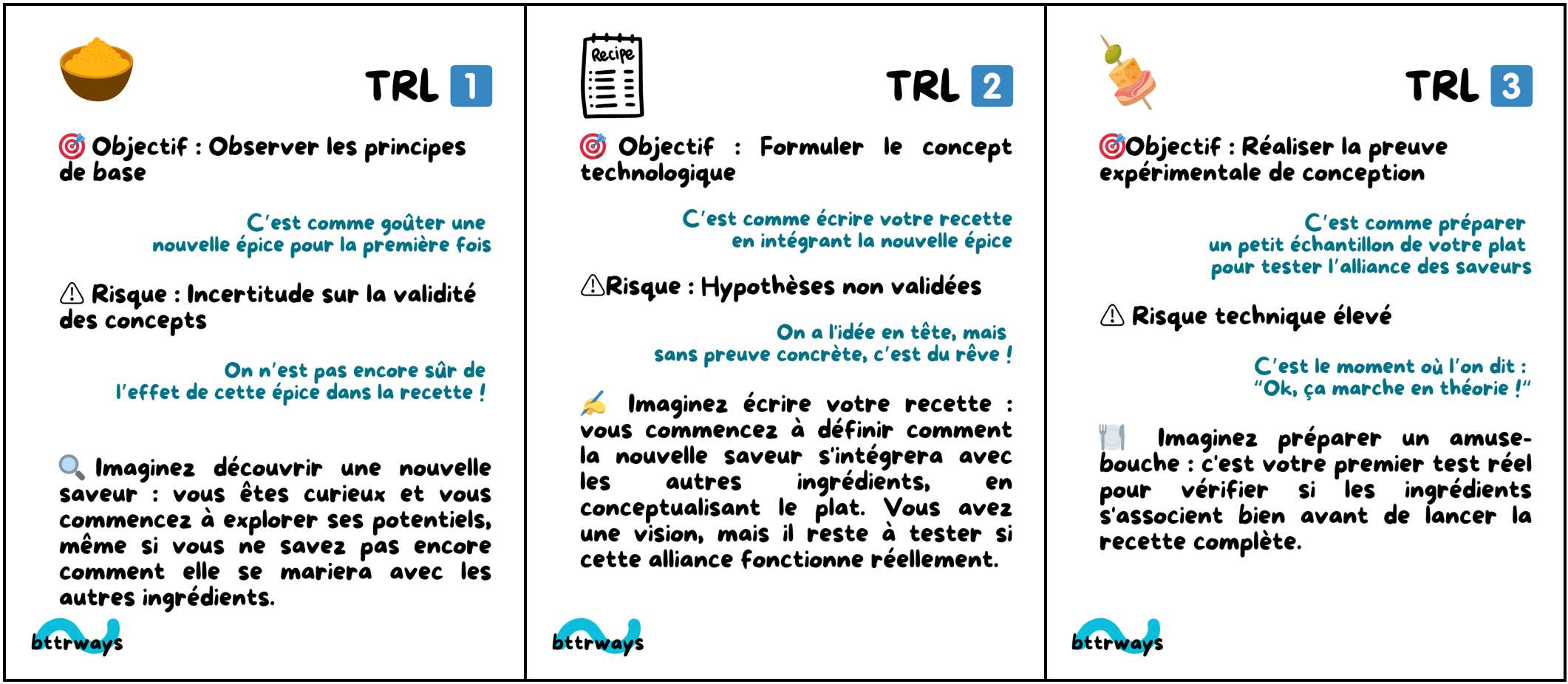
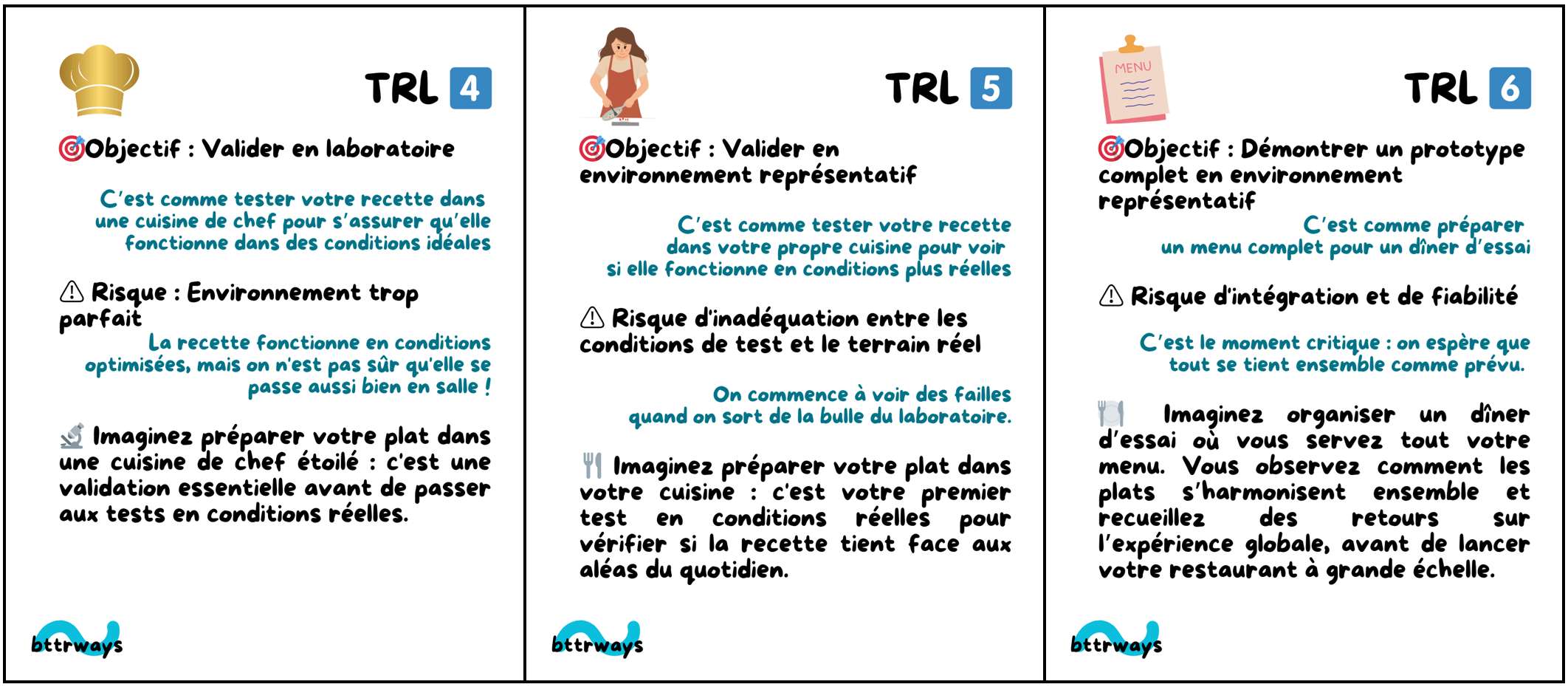
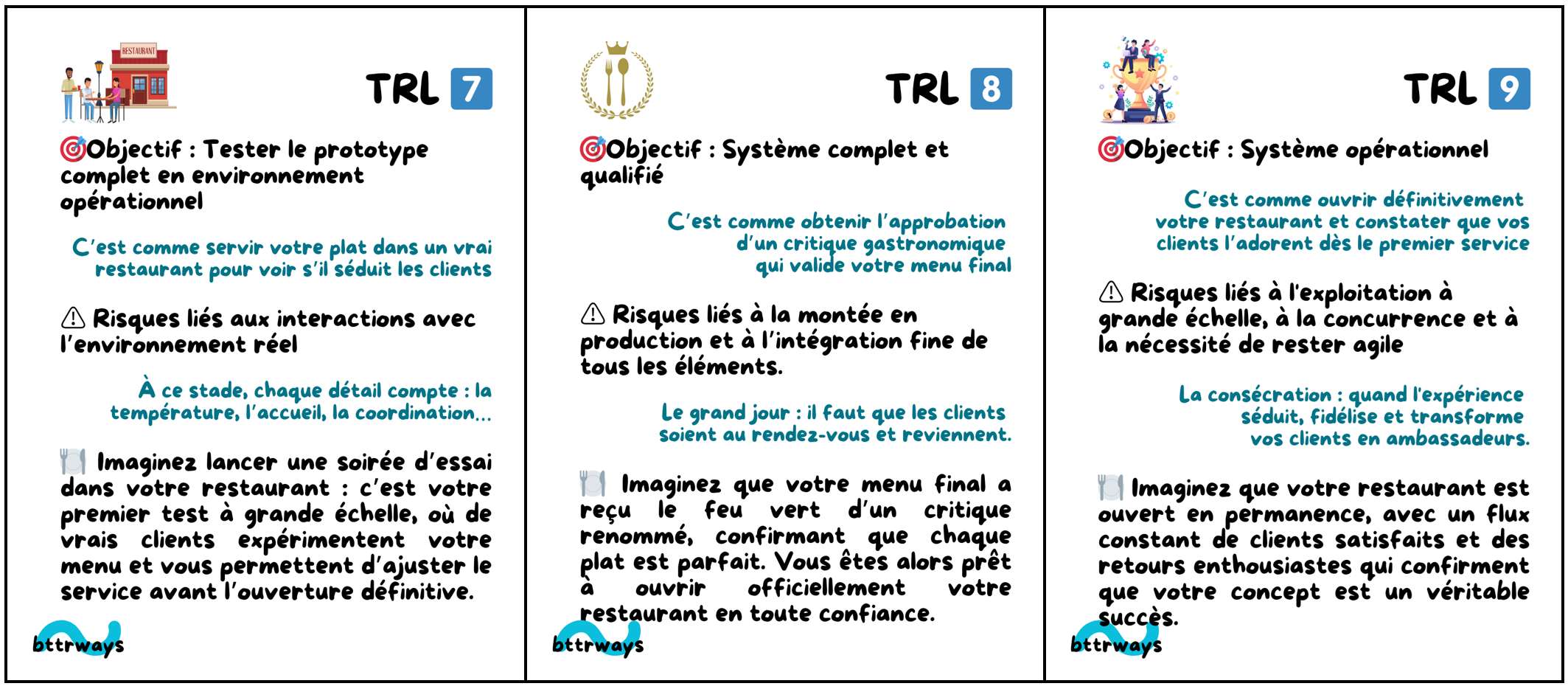
The 9 levels of technological maturity
To assess precisely where your innovation project stands, the Horizon Europe programme offers a very well-designed TRL self-assessment tool. This tool provides concrete examples for each level of technological maturity across various fields:
- A manufactured product
- An industrial process
- A piece of software
- A medical device
- A medicinal product
The tool is available on the Horizon Europe portal [6].
Horizon Europe: how TRL structures funding
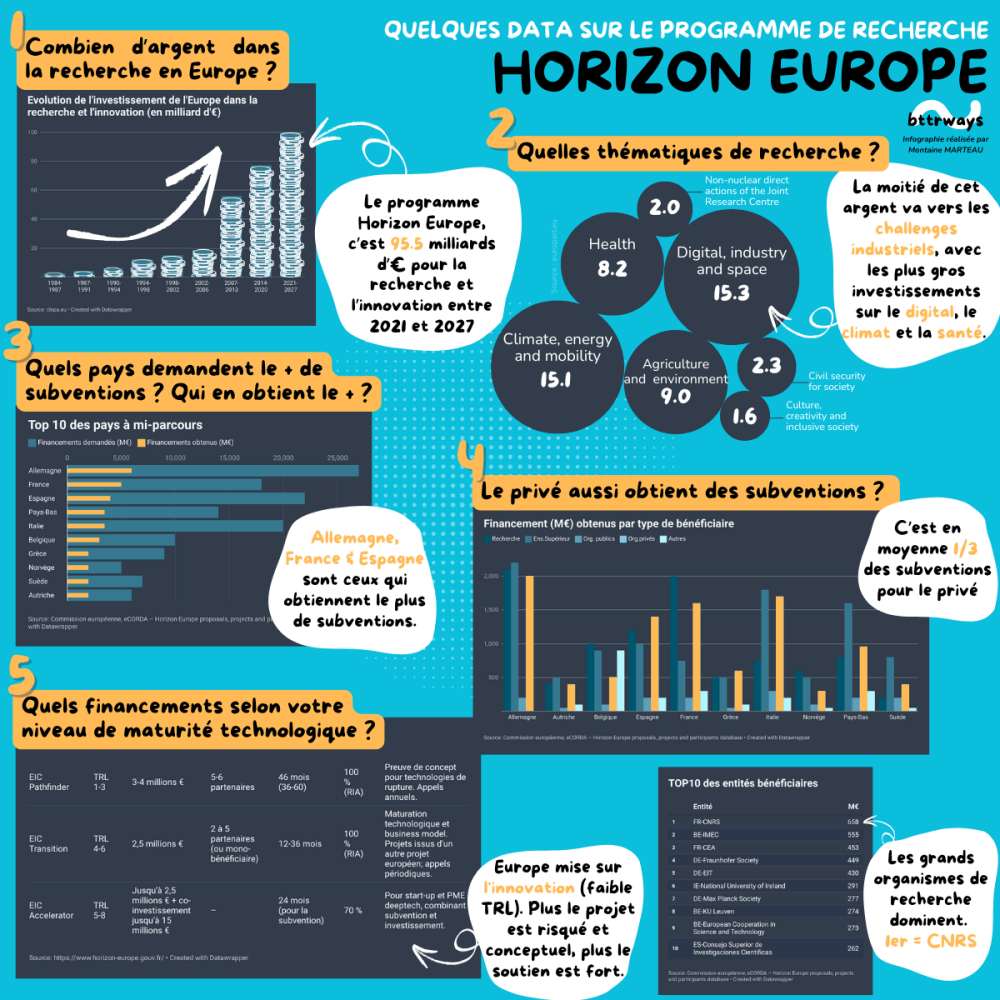
Horizon Europe is the European Union's research and innovation funding programme. For the 2021-2027 period, it is endowed with an impressive budget of 95.5 billion euros. Europe designed this scheme to fund all new ideas, with a clear logic: the riskier and more conceptual a project (low TRL), the greater the financial support.
Investments are mainly directed towards three strategic areas [7]:
- Digital, industry and space: €15.3 billion
- Climate, energy and mobility: €15.1 billion
- Health: €8.2 billion
Germany, France and Spain are the main beneficiaries of this funding [8]. It is worth noting that, although public bodies capture a large share of the grants, the private sector is not left out: around a third of the grants goes to private companies. So it is entirely possible for your company to apply for European projects to obtain funding.
Major research organisations such as the CNRS in France are among the entities that receive the most funding, but many innovative SMEs and startups also access these funds, notably through the dedicated instruments.
This structuring of funding by TRL level supports innovations throughout their development, adapting financial support to the specific needs of each phase.
Go on, take the plunge! Europe is there to support companies' innovations. There are many options and you can get support with your applications. An excellent starting point is the page of the French Ministry of Higher Education [11], which lists all the funding options. Here are the programmes most frequently used by the private sector:
Here is an infographic that brings together all the data I have shared on the Horizon Europe programme:
The "Valley of Death": When innovation stops too soon
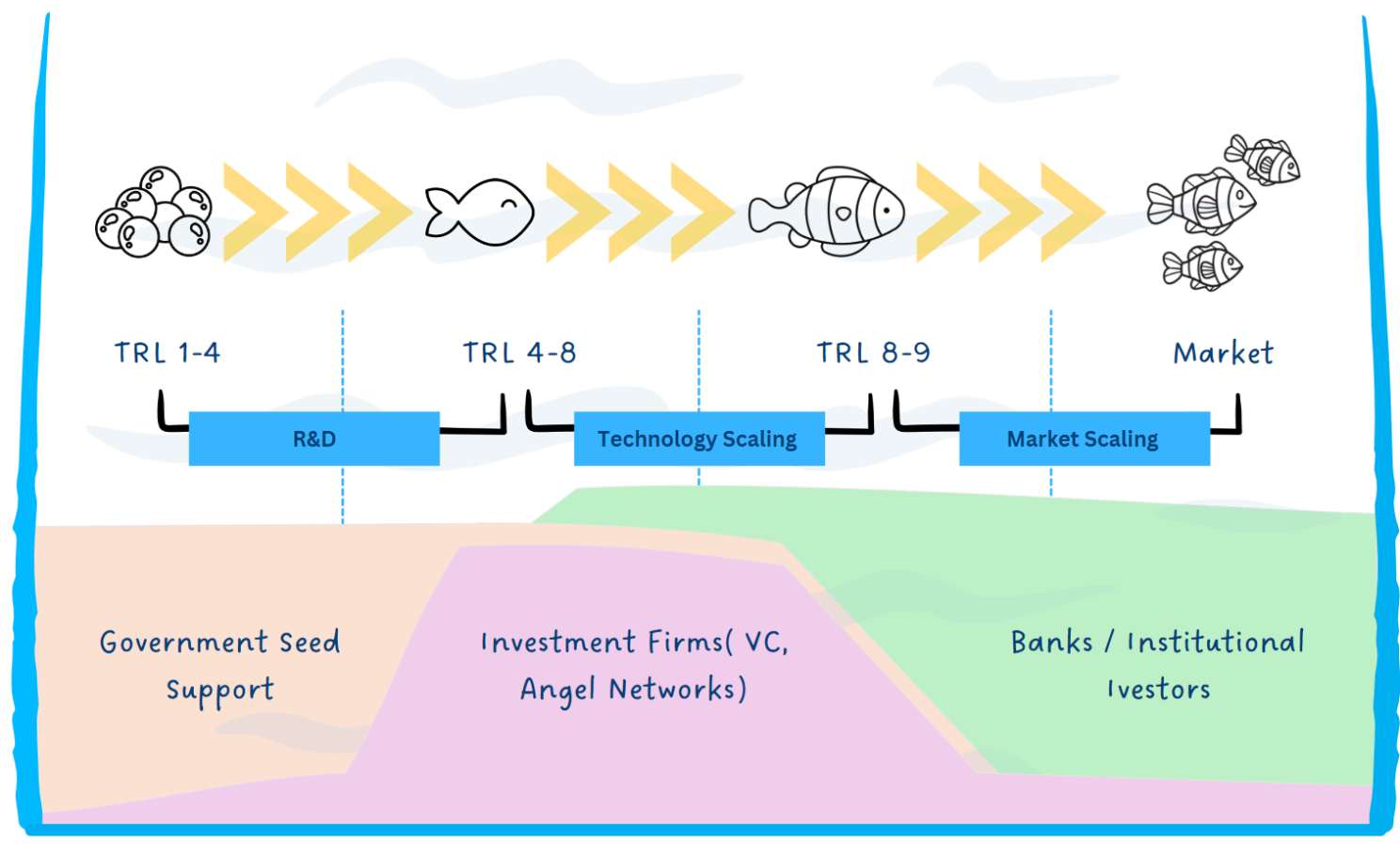
One of the most critical phases in developing an innovation is the transition between the prototype and industrialisation. This phase of moving from proof of concept to actual production is often called the "valley of death", because it is here that many promising projects collapse despite their technological potential. If you work in innovation, you too must have cases in mind. Because the statistics are indeed unequivocal: around 50% of startups fail to cross this valley [9].
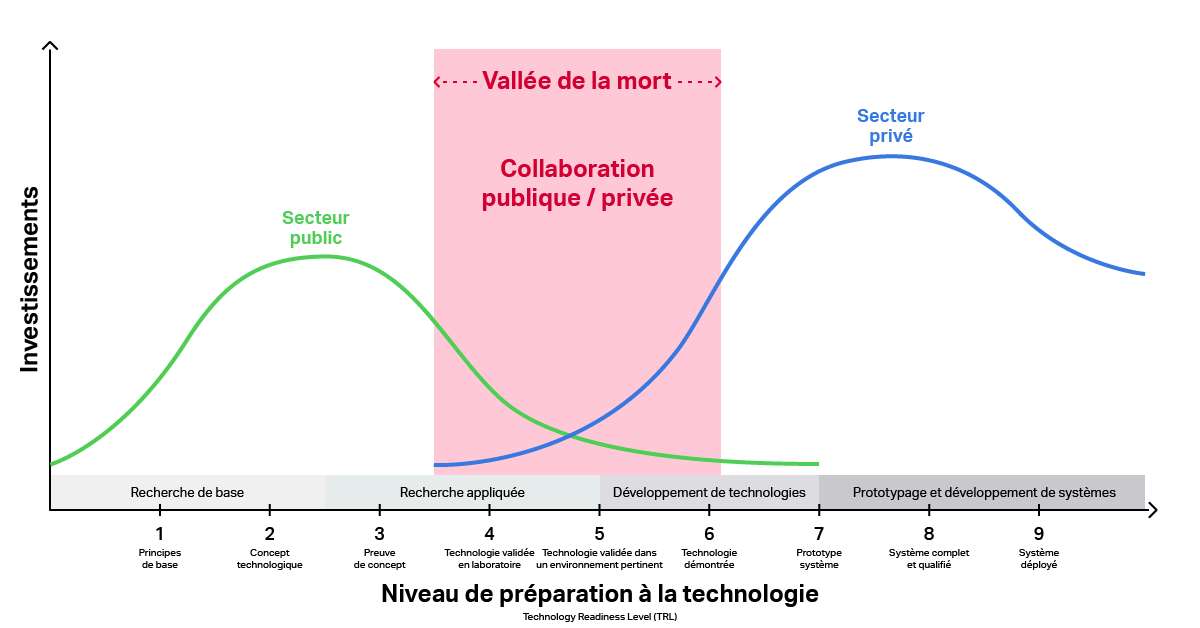
Crossing the valley methodically
This experience shows how important it is not to rush the steps when developing an innovation. To cross the "valley of death", it is essential to fully validate each level of technological maturity before moving to the next. When you go too fast, you risk funding the later steps prematurely, and therefore potentially investing resources in what is not the most important thing at this stage of development.
As a specialist in entrepreneurial development points out: "The Valley of Death is that critical period where your startup has developed a working prototype but has not yet found its market or generated enough revenue to be profitable" [10]. It is precisely at this moment that the TRL methodology can serve as a structuring guide.
The transition between the working prototype and the system demonstrated in an operational environment is often the breaking point for many startups. To succeed in this delicate passage, companies must adopt a methodical approach, even under the pressure of time and funding, and make sure their technology is truly ready for industrialisation and the market.
TRLs, a strategic tool for technology decision-makers
TRLs fit naturally with the methodologies already used by tech teams. They complement Agile and Lean by offering a macroscopic view where these methods focus on short development cycles and incremental value delivery. You can think of TRLs as the "GPS" that shows your position on the map, while Agile represents the way you move forward step by step.
For CTOs and CPOs who manage budgets, TRLs make it possible to concretely optimise R&D investments:
- TRL 1-3: modest investment, high risk
- TRL 4-6: substantial investment for prototypes and testing
- TRL 7-9: major investment for industrialisation
A balanced strategy maintains a diversified portfolio of projects at different TRL levels, typically in proportions of 70% (TRL 7-9), 20% (TRL 4-6) and 10% (TRL 1-3) for established companies.
TRLs are also a formidable tool during technology due diligence. They make it possible to objectively assess the real maturity of a target company's technologies, beyond the marketing promises.
Whether you are developing a technology, managing an innovation portfolio or evaluating an acquisition, the TRL scale turns the uncertainty of innovation into a more predictable and controlled journey.
Sources and references (11)
- NASA, "Technology Readiness Levels", Space Communications and Navigation Program, https://www.nasa.gov/directorates/somd/space-communications-navigation-program/technology-readiness-levels/
- Horizon Europe NCP Portal, "TRL Self-Assessment Tool", 2022, https://horizoneuropencpportal.eu/store/trl-assessment
- ETN News, "Airbus ZEROe hydrogen aircraft validations reach TRL 4", 2023, https://etn.news/hydrogen/airbus-hydrogen-aircraft-combustion-fuel-cell-tech-validations
- BIRAC, "BIRAC-TRLs: Technology Readiness Levels by BIRAC across areas under Biotechnology", 2022, https://birac.nic.in/desc_new.php?id=443
- Foundation for Innovation and Technology Transfer, IIT Delhi, "The Unseen Essential: Impact of TRLs on Startup Development", 2023, https://www.linkedin.com/pulse/unseen-essential-impact-trls-startup-development-fittiitdelhi-ditic/
- Commission Européenne, "Guiding notes to use the TRL self-assessment tool", Horizon Europe NCP Portal, 2022, https://horizoneuropencpportal.eu/sites/default/files/2022-12/trl-assessment-tool-guide-final.pdf
- Université de Coimbra, "Horizon Europe Budget Infographic", https://www.uc.pt/site/assets/files/430264/budget_infographic_ep.jpg
- Ministère de l'Enseignement Supérieur et de la Recherche, "Positionnement de la France à mi-parcours d'Horizon Europe", 2023, https://www.horizon-europe.gouv.fr/positionnement-de-la-france-mi-parcours-d-horizon-europe-38677
- Forbes France, "Comment éviter la vallée de la mort pour ma start-up ?", 2022, https://www.forbes.fr/entrepreneurs/comment-eviter-la-vallee-de-la-mort-pour-ma-start-up/
- La Clé C'est Le Temps, "Traversez la vallée de la mort avec votre startup", 2022, https://laclecestletemps.com/traversez-la-vallee-de-la-mort-avec-votre-startup/
- Ministère de l'Enseignement Supérieur et de la Recherche, "Horizon Europe : quelles opportunités pour les entreprises", 2022, https://www.horizon-europe.gouv.fr/horizon-europe-quelles-opportunites-pour-les-entreprises-35723

Product, innovation and MedTech field notes
Frameworks, methods, field feedback. Let us talk for 30 minutes to see what applies to your context.
Book a slot →
Thank you. Your comment will be published after review.